Participant care is sometimes described as a soft skill. We see it differently.
At BEAM, participant care is one of the clearest indicators of fieldwork quality. It shapes attendance, openness, trust, data quality, client confidence, and the overall research experience. When people feel informed, respected, and comfortable, they are more able to share honestly.
That matters in every project. It matters even more when the research asks something significant of them.
CLARITY BUILDS CONFIDENCE
Taking part in research can feel unfamiliar. Participants may wonder who will be present, what they will be asked, how their information will be used, whether they are expected to prepare, and what will happen after the session.
CLEAR COMMUNICATION CREATES CONFIDENCE
In our donor insights project, participants were asked to discuss a sensitive charity topic connected to blood cancer, blood disorders, and stem cell donation. Some had lived experience. Others had limited prior knowledge and were understandably cautious. The client team was travelling from Germany to observe, which made attendance and authenticity especially important.
We knew care had to begin at recruitment.
Every participant was screened by phone, carefully briefed, and given space to ask questions. We explained the nature of the sessions, the moderator, observer presence, and the purpose of the research. Across a long lead time, we maintained weekly contact to keep people engaged and reassured.
This was not simply a delivery tactic. It was the right way to handle a sensitive subject.
CARE PROTECTS HONESTY
Participants give more when they feel safe.
That does not mean leading them or over-comforting them. It means creating the conditions for honesty. It means setting expectations clearly, respecting boundaries, and making sure the experience feels organised rather than uncertain.
In-home research is a good example. Asking people to host client colleagues, allow photography, show product storage, or discuss personal routines requires trust. In our customer closeness programme, we built that trust through repeated agreement capture, clear requirement setting, and participant profiles that helped client pairs arrive with useful human context.
The Participant-on-a-Page profile was a small but powerful tool. It helped reduce nerves, support rapport, and keep conversations grounded in the participant’s own language and behaviours.
This is where care becomes practical. It is not an abstract value. It is built into the materials, the briefing, the schedule, the consent process, and the way people are spoken to.
Read our CUSTOMER CLOSENESS CASE STUDY here.
COMFORT FOR EVERYONE
Participant care also supports clients and moderators.
When participants arrive calm and prepared, moderators can spend less time settling the room and more time exploring the research questions. Clients can observe with confidence. Schedules are less likely to slip. The project feels more controlled.
In our automotive fly-in project to Hamburg, care meant much more than friendly communication. Participants needed clear itineraries, individual pre-event briefings, travel support, accommodation details, entertainment planning, and an experienced team leader to accompany the group. The group had to feel looked after throughout the two-day experience.
That care protected both the participant experience and the research outcome.
Fly-in research places participants in an unusual situation. They are away from home, spending time with others, following a schedule, and contributing to research across a concentrated period. If the experience feels disorganised, it affects the mood of the group and the quality of the insight.
A good experience is not a nice extra. It is part of the methodology.
Read our HAMBURG FLY-IN CASE STUDY here.
SENSITIVE SUBJECTS
Some topics require an additional layer of empathy.
In sensitive research, the way we recruit, brief, and support participants must reflect the emotional weight of the subject. That means giving people enough information to make an informed decision, without overwhelming them. It means checking comfort levels, not just eligibility. It means making sure no one feels surprised by the format, the content, or the people in the room.
In the donor insights project, this was central. Participants needed to feel that the research was meaningful and respectful. The client needed verified, genuine experiences. The moderator needed people who were ready to take part with confidence.
The outcome showed the value of that approach. Attendance was strong, the sample was verified, and participants described the process as transparent and well managed.
One of the most powerful reminders came after the project, when a participant shared that taking part had prompted them to register as a stem cell donor. They were later matched with someone in need of a transplant. It was an extraordinary example of how thoughtful research can reach beyond the project itself.
Read our DONOR INSIGHTS CASE STUDY here.
DATA CARE IS PEOPLE CARE
Participant care also includes personal data security.
People trust us with information about who they are, where they live, what they buy, what they believe, and sometimes what they have experienced. That trust needs to be protected in how information is collected, stored, shared, and deleted.
For in-home interviews, we used secure data transfer, password protection, two-factor authentication, QR code access, and timed session time-outs. Participants were also guided to review and remove sensitive items from their home before any photography or filming.
These details matter because care does not stop when a participant says yes. It continues through every interaction and every system that holds their information.
THE BEAM VIEW
We believe fieldwork should feel human from start to finish.
That means participants are not treated as names on a grid. They are people giving time, energy, opinions, memories, routines, and sometimes very personal stories. Our responsibility is to make that experience clear, respectful, and worthwhile.
When participant care is done well, it is felt by everyone. Participants feel prepared. Clients feel reassured. Moderators feel supported. The research feels more honest, more natural, and more useful.
That is why participant care is not separate from fieldwork quality. It is fieldwork quality.
Let’s talk…
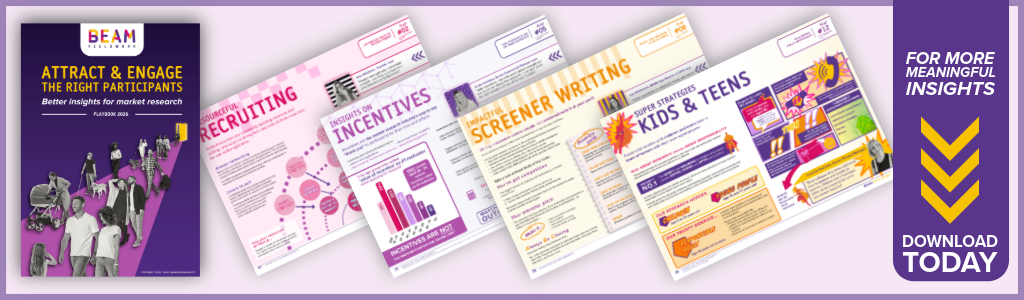
If your project asks a lot of participants, emotionally, practically, or personally, we can help design fieldwork that protects their experience and the quality of your insight. DOWNLOAD OUR PLAYBOOK…