
A North London council needed new interviewers to support current and future fieldwork projects.
Alicia, Senior Project Manager at BEAM, worked with the existing FCG multi-agency group to meet this need. Together, they recruited and trained a new group of local interviewers.
The council led the initial recruitment activity. Meanwhile, BEAM supported screening, selection, training, onboarding and readiness for live fieldwork. The approach created a fast and cost-effective route from application to active interviewing. It also established a local interviewer network that could support future projects.

THE BACKGROUND
Skilled interviewers are central to good fieldwork. They create trust, listen carefully and help participants feel comfortable sharing their views.
However, finding people with the right confidence, curiosity and communication skills takes care. Recruitment must also lead smoothly into training and real work. For this programme, Alicia worked alongside partner agencies to recruit interviewers from a specific North London community.
THE BRIEF
The aim was to recruit and prepare a new group of interviewers based within the NW2 postcode.
Unlike our usual model, the council managed the initial recruitment. It posted an adapted FCG advert across social media, local networks and job boards. Around 30 people applied. Each applicant then completed a 20-minute telephone screening interview.
THE APPROACH
Following the screening process, the ten strongest applicants were invited to face to face training.
All ten attended. This gave the programme a 100 per cent training attendance rate among those selected. The group was engaged, outgoing and ready to learn. Importantly, every attendee lived within the NW2 postcode and was happy to travel for work.
FIELDWORK DELIVERABLES
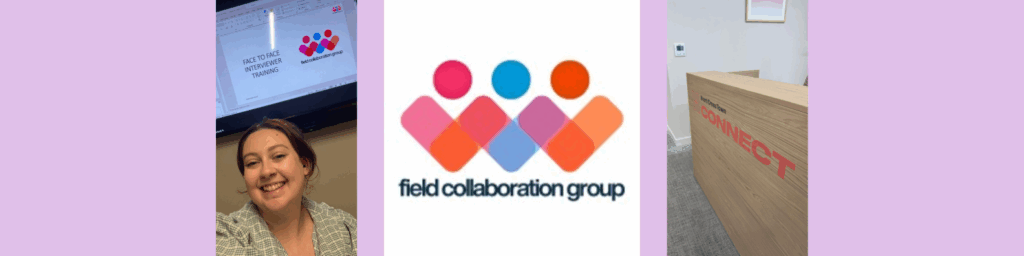
Training ran from 10am to 4pm. Attendees brought their own lunch, which helped keep the practical costs low. We used the FCG training slides rather than the online training session. In addition, each interviewer received a bespoke work pack on the day.
This gave the group relevant guidance they could use during training and once they entered the field. Paperwork was also signed during the session. Shifts were then booked, which reduced delays between training and deployment.
END TO END MANAGEMENT
The full recruitment process took two weeks from start to finish. That period covered advertising, applications, telephone screening, selection, training, paperwork and shift booking.
Alicia helped connect each stage of the programme. This ensured that training was practical and that suitable interviewers could move into active work quickly. Work was available immediately after training. Therefore, successful attendees had a clear next step and could apply their learning straight away.
SUCCESSFUL OUTCOMES
All ten selected applicants completed the face-to-face training. At the time of reporting:
– Six were actively working
– Two were due to start the following week
– One remained to be confirmed
– Once decided the work was not right for them
Those who had started work performed as well as existing interviewers. This was an important quality measure. The programme did not simply attract applicants. It identified people who could meet the expected standard in live fieldwork.
BEAM IN ACTION
For BEAM, good interviewer recruitment is about more than filling spaces.
We look for people who can engage naturally, follow a research approach and treat every participant with care. We also make sure they understand what the work involves before entering the field. In this programme, the telephone screening helped identify the strongest candidates. Meanwhile, face to face training allowed the team to assess engagement, confidence and readiness.
The bespoke work packs also supported quality assurance. They gave new interviewers practical information to use beyond the training room. Finally, completing paperwork and booking shifts on the same day reduced operational risk. It created momentum and helped the new interviewers move directly into available work.
THE RESULT
Overall, the programme delivered a successful and cost-effective training process.
The main investment was staff time and travel. All selected applicants attended, while most had either started work or had a confirmed start date. The programme also created a local group of trained interviewers who were willing to travel. Most importantly, those already working performed to the same standard as established interviewers.
THE LEARNING
This programme showed that council led recruitment can work well when it is supported by structured screening, practical training and immediate work opportunities. Local advertising reached around 30 applicants. A focused telephone screening process then identified ten people with the strongest potential.
Attendance was excellent because expectations and next steps were clear. In addition, completing onboarding during training removed unnecessary delays. The experience also reinforced the value of practical, in person learning. It gave the new interviewers space to ask questions, build confidence and prepare for real fieldwork.
Do you need experienced interviewers for your next research project? BEAM can provide skilled, fieldwork ready interviewers who fit your location, audience and delivery needs. Speak to our team about reliable interviewer support for your next project.
Back to Case StudiesLet BEAM Fieldwork support your research project. Fill in the contact form below
or give us a call on 0161 850 9864